A couple of questions about foot drop and their answers


Two of the readers of my blog asked me about foot drop. Their questions are given below. My response to them follows.

QUESTION

lu Hi there,
Really need some advice/information. About 5-6 weeks ago i started noticing that my left foot felt funny, tingling and numb, and i was also experiencing some problems walking but i couldn’t quite pinpoint it and thought it would go away. I started to realise that i couldn’t dorsiflex my left foot, it felt numb and tingly on the top of my foot and to half way up the shin. After spending a few days trying to exercise my foot i regained some minimal dorsiflexion (about half capacity compared to my normal right leg) I have no pain and minimal discomfort (the bones on the top of my foot and around my ankle are starting to ache as i constantly try and flex my muscles/toes to improve action). I have been told by my GP that i have drop foot, which i’d already suspected, but i can’t get an appointment for another 7 weeks with an orthapaedic consultant and i am starting to really stress myself out reading so much on the internet that it might be ALS/MS or some serious underlying condition. I’m mid-twenties, female and was totally free of health issues until this incident. I don’t know whether I should push my doctor for an earlier referral – i have no other symptoms and can get about but walking is becoming tiring and upsetting. The condition has not deteriorated but nor has it improved much – I was praying that it was simply a transient problem but after 6 weeks i’m not so sure. I haven’t suffered any discernible trauma or injury (except i remember carrying a heavy bag and wearing heels for a few hours which made my foot hurt prior to these symptoms). Please if you can offer any info/assurances that it is common to have something like this out of the blue, it would be much appreciated.


Dear Lu,
thank you for writing in to me. You say you are in your mid-twenties so first let me reassure you. More than likely you do not have anything serious such as amyotrophic lateral sclerosis (ALS) or multiple sclerosis (MS). Let us first discuss ALS since that is a scary disease indeed. ALS does at times start off with an innocuous foot drop but you are not in the right age group for it. Usually ALS is a disease which strikes people in their fifth or sixth decade of life. Familial ALS begins at a younger age but here the history is of multiple family members having ALS at a young age.

Now let us come to MS. MS can have myriad clinical presentations. While it can present with foot drop it is usually not a common presentation. More common presentation of MS in a young lady like you is an attack of optic neuritis (sudden loss/blurring of vision in one eye along with pain) or an incomplete transverse myelitis (TM). Patients with TM depending upon the level of involvement of the spinal cord (usually it is in the cervical cord) may present with weakness in the legs, numbness, loss of bladder control, problems with gait and balance.

So most likely you have a foot drop due to either peroneal nerve palsy or sciatic nerve palsy. Now you deny any trauma. At times the cause of peroneal nerve palsy can be “subtle” such as repeated crossing and uncrossing of the legs (in thin persons), falling asleep with the outer aspect of the knee (near the head of the fibula) pressing against something hard such as a bed railing and so forth or something pressing on the sciatic nerve (as it exits the pelvis) or at the level of the fibular head (peroneal nerve) . Rapid changes in body weight may make a person predisposed to compression palsies of various peripheral nerves. This is especially common in people who have marginal diets, alcoholic and diabetics.

My advice to you though would be to follow up with you GP. He/ she shall be the best person to guide the workup forward. I hope I have been able to offer you some useful advice.

Personal Regards,

Nitin Sethi, MD

QUESTION

Dear Dr Sethi,

Two months ago I had THR with a spinal block. Upon the spinal wearing off my right foot and leg from the knee down remained numb and I was left with foot drop.

Physical Therapy and a NEMS stimulator are not helping. The pins and needles feeling is lessening but still have tingling in my toes, top of my foot in certain positions. I have to constantly wear an AFO to walk or drive but it is very uncomfortable. The Surgeon thought my foot would come back by now but no improvement. If anything it seems worse.

What could have caused this? I was fine prior to the surgery. Is there any hope of my foot coming back? What can I do? I do not wear a brace at night and have tried Nuerontin to no avail.

Thank you, Lynee

Dear Lynne,
thank you for writing in. Foot drop can occur as a complication of total hip replacement surgery. The cause of the foot drop is usually pressure/ stretching of the fibers of the sciatic nerve. This can occur during the surgery itself or may occur due to the way the hip/limb was positioned during the surgical procedure. If the injury is a simple neurapraxia (pressure on the nerve), the nerve usually recovers fully in due course of time. Since two months have passed since your total hip replacement surgery and your foot drop persists it would be advisable that a nerve conduction study (NCV) be carried out. A good nerve conduction and electomyography (EMG) study shall give useful prognostic information namely to what extent is the nerve damaged and is the nerve regenerating? Also nowdays a high quality MRI scan can actually image the sciatic nerve itself.
The best person to guide you forward shall be your orthopedic surgeon and primary care physician. I wish you my very best.

Personal Regards,

Nitin Sethi, MD
Euthanasia and the right to die


Euthanasia and the right to die


Prahlad K Sethi1, MD and Nitin K Sethi 2, MD


Departments of Neurology Sir Ganga Ram Hospital, New Delhi, India 1 and New York-Presbyterian Hospital, Weill Cornell Medical Center, New York, U.S.A 2


Address correspondence to:

Prahlad K Sethi, MD

Emeritus Consultant

Department of Neurology, Sir Ganga Ram Hospital

Old Rajender Nagar

New Delhi, India 110060

President Brain Care Foundation of India

http://braincarefoundation.com

http://braindiseases.info

On March 7th, 2011, the Law Commission of India, Ministry of Law and Justice in a landmark judgment recommended to the Government of India that terminally ill patients should be allowed to end their lives. By passing this judgment, India joins a small select group of nations that allow euthanasia in some form or other. This judgment has led to a vigorous debate in the media about euthanasia. Just what is euthanasia and what is the difference between active and passive forms of euthanasia? The word euthanasia is derived from Greek: eu ‘well’ + thanatos ‘death’. The Oxford dictionary defines euthanasia as the practice of killing without pain a person who is suffering from a disease that cannot be cured1. The Stedman’s medical dictionary gives a more comprehensive definition and defines it as the act or practice of ending the life of an individual suffering from a terminal illness or an incurable condition, as by lethal injection or the suspension of extraordinary medical treatment2.

            Before we dwell deeper into the subject it is important to understand a few medical terms namely the difference between brain dead (BD) and persistent vegetative state (PVS). By all accounts Aruna Shanbaug has been in a PVS for the past thirty odd years. When she was strangulated her brain was deprived of precious oxygen and blood leading to what we neurologists refer to as anoxic encephalopathy. Anoxic encephalopathy may also occur following other causes of cardiac and respiratory arrest. Most patients do not survive the initial anoxic insult to the brain, either their heart naturally stops after sometime (cardiac death ensures) or their brain dies (brain death ensures). We shall come to brain death later. Some patients though do survive thanks in no small part to sophisticated life sustaining measures such as ventilators and advances in critical care medicine. If these patients are followed the outcomes are varied. Some may “wake up” and start interacting with the environment (talking, responding appropriately to pain and so forth). Others may “wake up”, open their eyes and even yawn but when closely assessed have no meaningful interaction with their environment. It is these patients who after a period of observation are determined to be in a PVS. A person who is in a PVS shall never talk, walk or interact with his loved ones. In a way he is a vegetable. PVS is very different from BD. For a person to be brain dead certain strictly defined criteria need to be met. These criteria with minor variations such as length of observation, interval between repeat testing, number of physicians needed to certify BD are essentially similar across the world. The diagnosis of brain death is primarily clinical meaning that it is made after a thorough neurological examination conducted by a trained physician preferably one skilled in neurosciences (neurologist or neurosurgeon). In cases where for some reason the clinical examination is incomplete or in doubt, confirmatory tests such as an electroencephalogram (EEG) are available to confirm BD.

The question of passive euthanasia may arise in patients who are in PVS. It may be requested by one of the family member to “end the patient’s suffering”. Active euthanasia on the other hand is usually requested by a patient who is terminally ill and in pain such as those with advanced cancer or those suffering from progressive neurodegenerative conditions such as amyotrophic lateral sclerosis (ALS) which in its final stages leads to difficulty in breathing. Terminal patients with ALS are further unable to clear their own secretions and are unable to swallow or cough. These patients may request their doctor for a “mercy killing”. Please kill me and end my suffering and pain. A point to clarify here is that the question of euthanasia whether active or passive does not even arise in a patient who is brain dead. Brain death is now around the world medically and legally synonymous with cardio respiratory death. Once a patient is declared brain dead, he is dead. You do not have to wait for the heart to stop before you can say the patient is dead. As someone said rightly “you cannot die twice-once when the brain stops and once when the heart stops!”3. Hence in a brain dead patient, the law allows the physician to stop the ventilator and discontinue all other critical care support4. Remember the patient is already dead so there is no need for the ventilator to keep running. Hence the question of euthanasia whether active or passive is mute in a BD patient. Usually after a patient is declared BD the family is approached to consider organ donation. If the family decides to donate organs, the “dead patient” is kept on the ventilator till the organs can be harvested. If the family decides against organ donation, the ventilator is stopped and the body handed over to the next of kin.

So now let us move on to the topic of euthanasia. Active euthanasia (as for example mercy killing via a lethal injection or by giving an overdose of pain killers and sleeping pills) is currently illegal in almost all countries of the world. In most countries a physician who assists in active euthanasia can be prosecuted, lose his license to practice medicine and can even be jailed. Put in another way the law as it stands now condemns a physician for actively killing someone (even though the patient requests it) but does not condemn a physician for failing to save a terminally ill patient’s life (aka active euthanasia is illegal but not passive euthanasia). Netherlands and Switzerland are two countries where active euthanasia is practiced openly though the medical, legal and social implications remain active topics for both professional and public debate. The courts in these two countries have allowed physicians to practice active euthanasia under certain strict conditions. In these countries too it is usually physician assisted euthanasia (the physician prescribes the lethal medication but it the patient who self administers the lethal medication) is more widely accepted (both by the public at large as well as ethically and morally by the physician community) than active euthanasia (physician administers the lethal injection himself). In Netherlands the following guidelines if followed strictly have traditionally protected physicians from prosecution: the patient’s wish to die must be expressed clearly and repeatedly, the patient’s decision must be well informed and voluntary, the patient must be suffering intolerably with no hope for relief however the patient does NOT have to be terminally ill (mental suffering is acceptable as a reason for performing assisted suicide and euthanasia in a patient who may be physically healthy), the physician must consult with at least one other physician, the physician must notify the local coroner that death resulting from unnatural causes has occurred 5.There is an ever increasing demand for the “right to die with dignity”. In an essay in the International Herald Tribune the right to die was defined as follows: “every person shall have the right to die with dignity; this right shall include the right to choose the time of one’s death and to receive medical and pharmaceutical assistance to die painlessly. No physician, nurse or pharmacist shall be held criminally or civilly liable for assisting a person in the free exercise of this right.” A fundamental thought underlying the right to die is the belief that one’s body and one’s life are one’s own, to dispose of as one sees fit. So theoretically if one wants to commit suicide one should have the freedom/ right to do so. Opponents of the right to die point out that legalizing the right to die may lead to irrational suicides. Different religions have different thoughts of view when it comes to the right to die. Hinduism in fact accepts the right to die for those suffering from terminal illnesses allowing death through the non-violent practices of fasting to death (Prayopavesa). Some Jains practice Santhara by which they seek voluntary death through fasting. Since the decision to practice Santhara is taken while one possesses a sound mind and is aware of the intent it cannot be equated to suicide which is usually carried out in haste when a person is in the midst of depression they point out.

So euthanasia remains a very complex topic with medical, legal and social implications. A concept which is virtually non-existent in India but quite common in the United States is the concept of a living will. A living will is an advance directive and a legal document in which a person makes known his or her wishes regarding life prolonging medical treatments. In a living will a person indicates beforehand which treatments he would or would not want to receive in the event he suffers a terminal illness or is in a PVS and is unable to speak and make decisions for himself. So it reasons that the living will does not become effective till the patient is incapacitated. As long as the patient can make decisions with a sound mind he can decide what treatments he wants or does not want. However after he becomes incapacitated or enters a PVS the living will comes into play. If in the living will he has documented that in the event of suffering a cardiac arrest in the background of a terminal illness he would not want to be resuscitated and put on a ventilator, his wishes shall be respected by his treating physicians. A comprehensive living will can give a patient substantial autonomy over what happens to their body at the final hour of their terminal illness.

We wish to highlight here that passive euthanasia in the form of withholding extraordinary life supporting measures (such as the decision to intubate and mechanically ventilate a terminally ill patient) is already routinely practiced in critical care units across India on a daily basis. In our experience once the hopelessness of the medical situation and the gravity of the illness is explained to the relatives, they usually comprehend and request discharge from the unit so that the patient can take his last breath at home surrounded by family and friends. It is only when disagreement about termination of care arises among family members or when a conflict of interest is perceived by the family members with respect to the treating physicians (they want him to die so that they can free the bed/ ventilator) that these cases reach the attention of the media and the public at large such as in the case of Aruna Shanbaug. We hope that these misconceptions about passive euthanasia shall abate with better public education. The judgment on March 7th is indeed a landmark one and its implications on the Indian health system in the coming years shall be profound and keenly watched by all.

References

  1. Oxford dictionary online at http://oxforddictionaries.com
  2. Stedman’s Online Medical Dictionary at http://www.stedmans.com
  3. Sethi NK, Sethi PK. Brainstem death-Implications in India. J Assoc Physicians India.2003 Sep; 51:910-1.
  4. Sethi NK, Sethi PK. Brain death and decision dilemmas. Neurosciences Today. Jan-Mar 2003; 7:27-28.
  5. http://www.libraryindex.com/pages/573/Euthanasia-Assisted-Suicide

A question about oligoclonal bands (OCBs) in multiple sclerosis and a reply

Recently one of the readers of my blog asked me a question about the presence of oligoclonal bands (OCBs) in multiple sclerosis. I am reproducing her question here and my reply to is follows. Hope it helps some of you out there.


Hello Dr. Sethi:
I found your informative blog Brain Care Foundation online, and I wanted to get in touch with you about the neurological symptoms I have been experiencing in hopes that you can provide some guidance to me.

I am a 28-year-old Indian-American female who was recently diagnosed with optic neuritis. An MRI of my brain showed one unspecified speck and a lumbar puncture showed three oligoclonal bands that were also present in the blood, ruling out multiple sclerosis, according to my doctor. All other blood work is normal.

She has recommended that I see a rheumatologist to rule out other autoimmune diseases.

I have been very concerned about underlying diseases that may have causes the optic neuritis and my question to you is whether I should be concerned about the presence of three oligoclonal bands in the cerebral spinal fluid. Ideally, I understand there would be none, but it seems somewhat arbitrary to me that 1 or 2 would be considered normal and 3 would be considered an abnormally high level.

I specifically wanted to seek your advice because I read in your blog that “greater than 3” would be the amount of concern.

Thank you in advance for any insight you can provide.

Sincerely,
R

p.s. please feel free to post this question on your blog without using my name

Dear R,

thank you for writing in to me. You ask me a very specific question regarding the presence of OCBs in multiple sclerosis (MS) and I shall be happy to answer it for you. OCBs can be seen in multiple other conditions apart from MS. What we look for in MS is that the oligoclonal bands should be only present in the cerebrospinal fluid (CSF) and not in the blood. As you are aware MS is a demyelination disease of the central nervous system (brain and spinal cord). So it reasons that the bands should only be present in the spinal fluid and not in the blood. We refer to this as intrathecal synthesis of OCBs. If OCBs are present in both the spinal fluid and the blood, one needs to rule out diseases that may cause passive transfer of OCBs from the blood into the spinal fluid. Now to your second question. Just how many OCBs are considered abnormal or worrisome for MS? This is a tough one to answer as studies have shown conflicting results. Some studies have indicated that a higher number of OCBs in the spinal fluid is more specific for MS (aka increases the risk for conversion of a clinically isolated syndrome into a clincally definite MS). In other studies this has not been conclusively proven.

Hope that answers your queries. I wish you my ver best.


Personal Regards,

Nitin Sethi, MD
White matter lesions, migraine and memory problems: a question and an answer

One of the readers of my blog wrote in with a question about white matter lesions on brain MRI. Her question and my response to it follows.

Question:

I was recently referred to a neurologist by my primary care physician for treatment of my migraines. While migraines have a been a part of my life, they have been occuring with greater frequency of late (10+ per month). To rule out any other cause of my migraines, the doctor ordered an MRI. The MRI revealed 20+ white matter lesions throughout my brain (various locations, various sizes). The neuro was at a loss as to why I had so many. I did inform him that approx 15 years ago I had unilateral ect, and asked if perhaps this had caused it? I also let him know that I was experiencing significant memory issues (forgetting short term and long term memories, and even blanking on spelling my own last name for a minute or two). I asked him if ect could be responsible? The neuro has since followed up with me and has stated that ect could NOT be responsible for the lesions, and was not likely to be responsible for my recent, memory issues. I have been tested for MS, lyme, infection, etc. – all negative. I do not suffer from depression or take any other medications which would cause memory issues. Any thoughts? What else could cause these lesions? Is these any research at all into lesions and ect? I am trying to get into Neuropsych testing to determine the extent of my memory loss. The migraines are now currently being sufficiently controlled with Imitrex.

Answer

Thank you for writing in to me M.  White matter lesions are commonly documented on brain MRI done for various reasons (in your case as a work up of migraines). The differential diagnosis of white matter lesions is broad and varies based on the age of the patient. In “most” adult patients especially those with risk factors for microvascular disease such as diabetes mellitus, essential hypertension (high blood pressure), dyslipidemia (high cholesterol), current or past heavy smokers these white matter lesions respresent small vessel disease (also referred to as microvascular ischemic small vessel disease). Meaning that the small blood vessels in the brain are showing signs of ischemia (lack of blood flow). So when I see extensive microvascular (small vessel) disease on a patient’s MRI scan of the brain what I worry about is the possibility of a stroke in the future. As a neurologist, I then try to identify his stroke risk factors and attempt to modify them. If he has high blood pressure and is not an on anti-hypertensive medication–start an appropriate anti-hypertensive, if he is already taking a blood pressure medication but the blood pressure is still not well controlled then I may need to increase the dose of his medication and/or change it. As per the new Joint National Commission guidelines broadly speaking the lower the blood pressure the better it is (earlier a blood pressure of 140/80 mm Hg was accepted as ” normal”, now we aim for level of 120/70 mm Hg). If the patient’s blood sugar is high (fasting blood sugar greater than 107mg/dl), I would investigate him for diabetes mellitus. For this blood sugar is tested in a fasting state and after meal (post prandial). There are normal values and if the patient’s blood sugar exceeds these normal values, then he has diabetes mellitus. Diabetes mellitus can be controlled by a combination of dietary modification, exercise, oral hypoglycemic medications (pills) and/or insulin injections. If the lipid profile is deranged (high total cholesterol, high low density lipoprotein, high triglycerides and low high density lipoprotein), then again dietary modifications, exercise and lipid lowering medications (statin group of medications such as Lipitor are one example) are recommended.

Now what do white matter lesions represent when they are seen in a young person (like for example in a  young lady 25 years of age)?  The main differential and what concerns most patients and physicians alike is whether this could represent multiple sclerosis. I have written about this before and again want to emphasize that the diagnosis of multiple sclerosis is a clinical one and not based solely on the MRI scan of the brain. The MRI scan always has to be interpreted after taking the history and examination findings into consideration. Also the white matter lesions of ischemic small vessel disease are different from the white matter lesions (plaques) of multiple sclerosis. In multiple sclerosis the lesions have a characteristic appearance and distribution in the brain.

White matter lesions can also be seen in many other infectious (Lyme disease is a good example) and inflammatory conditions (sarcoidosis, connective tissue diseases which cause vasculitis in the brain). Most of these diseases can be identified with the help of a good history and some basic tests.

White matter lesions are also commonly seen in people who suffer from migraines (more commonly seen in women migraine sufferers). Why do white matter lesions occur in migraine patients. While there are many theories of migraine pathophysiology, migraine is a vascular headache and hence the blood vessels are again involved.

Do white matter lesions cause memory problems. Now that is a tough question to answer. When I see extensive white matter disease in a brain MRI, it tells me about the health of the brain and the blood vessels. If a person has extensive white matter disease, the same pathology shall be seen in the blood vessels of the heart. So they are prone to both heart disease and brain disease (stroke, transient ischemic attacks). While Alzhemier’s disease is the most common primary dementia, vascular dementia is exceedingly common too. What is vascular dementia? As the name suggests, it is dementia (memory impairment, problems in multiple cognitive domains) caused due to multiple small strokes in the brain or rather strokes in a strategic location. These strokes occur over a period of time and may be clinically silent (meaning that the patient may not even realise that he has suffered a stroke). The small strokes over a period of time though add up and cause vascular dementia.

I hope this helps in answering some of your questions M. My advise to you is to follow up with your primary care physician and the neurologist. They shall help guide your work-up further.

Personal Regards,

Nitin Sethi, MD

Incidentally discovered aneurysm in the brain. Now what do I do?

One of the readers of my blog wrote in to me. Her question and my response to it follows.

Hello Doctor,

I am a 27 year old otherwise healthy female. I work as a nurse and I recently got an MRI MRA due to some mild dizziness I was experiencing at work. I was shocked to learn that I have a 3mm aneurysm arising from the anterior aspect of the supracliniod portion of the left internal carotid artery consistent with ophthalmic artery aneurysm. I would greatly appreciate any advice/opinions you could provide….thanks so much.

Dear E,

                              Thank you for writing in to me.  Aneurysms in the brain are at times (actually quite frequently) discovered incidentally. The usual setting is that the patient seeks medical attention for some non-specific complaints commonly headache or like in your case dizziness. The doctor orders a MRI of the brain and the “silent” aneurysm comes to medical attention for the first time.

The majority of small sized aneurysms are clinically silent. By that I mean they cause no pain , headache, weakness in the arms or legs.  A small sized aneurysm may remain clinically silent and only come to medical attention when it ruptures and causes bleeding into the brain. Aneurysmal bleed usually causes subarachnoid hemorrhage (SAH). The SAH may be massive and carries a high morbidity and mortality rate. Survivors are usually left behind with significant neurological deficits (disabilities).

It is usually a giant aneurysm (defined as one greater than 2.5 cm in diameter)  that causes mass effect and hence may present clinically with weakness if it presses on the motor tracts in the brain or with problems with vision (decrease in visual acuity or double vision) if it press on the optic or other nerves with control the movements of the eye.

Now what to do when an aneurysm is discovered incidentally as in your case? Though I have not examined you, it is more than likely that the aneurysm is not the cause of your mild dizziness. The risk of an aneurysm to rupture has been studied  and the results are mixed. Since any aneurysm no matter what the size has the potential to rupture, every patient needs to be assessed on an individual basis for this.  Studies have shown that small aneurysms can be “safety” watched. The usual cut-off size is about 7 mm, though there is a debate whether aneurysms smaller than 7 mm in size carry a lower risk for rupture. It is well accepted that aneurysms greater than 25mm in size should be considered for therapy (there are different ways aneurysms can be treated—surgical treatment Vs endovascular treatment Vs a combination of the two) after closely weighing the potential risks of the surgery against the benefits (how likely is the aneurysm to rupture in the near future).

So my advise to you is to follow up with your physician.  After reviewing your MRI brain and other studies such as MRA (magnetic resonance angiography), he shall determine the best approach going forward. If he decides to wait and watch, then likely you shall need serial MRI studies at some interval of time (every 3 months Vs every 6 months Vs every year). Again there is no hard and fixed rule about how frequently you shall need to be scanned, this too shall be determined by your physician.

If you have high blood pressure, it shall be wise to maintain good blood pressure control.

I hope I have been able to shed some light on your query. Please feel free to write in again.

Personal Regards,

Nitin Sethi, MD

Disclaimer and confidentality

It is the start of a New Year 2011 so I wanted to again post my disclaimer and a small comment about confidentality. As many of you know information once on the Internet may stay on Internet forever and can be assessed by anyone. So my advise to the readers of my blog is this: if you do write into me and post on this blog please change your name or use an alias. Also it shall be better if you do not use your email address.

Here is my disclaimer:

This blog is my own endeavor and project. Though I work in New York-Presbyterian Hospital, Weill Cornell Medical Center, New York, the blog is in no way connected to the hospital.

The information provided in this blog should not be used during any medical emergency or for the diagnosis or treatment of any medical condition. A licensed medical professional should be consulted for diagnosis and treatment of any and all medical conditions. Call 911 if you have a medical emergency.

Links to other sites are provided for information only — they do not constitute my endorsements of those  sites.

 Any duplication or distribution of the information contained herein is strictly prohibited.


Nitin Sethi, MD

Seizures associated with excessive alcohol intake-why me?

One of the readers of my blog asked a question about alcohol induced seizures. His question and my reply to it follows. I have removed the name to maintain confidentality as always.

QUESTION

Hi; I wanted to read up about alcohol induced seizures because I have a question(s) for you, but I guess I should give you a little background first. I have had 7 of them, never had a problem before. The first one I do remember…I was drinking heavily ( Vodka ) and had done some recreational drugs too. I was in the kitchen and my bottom jaw “stuck” out and my hands clinched tight! My brain said “lay down” so I did and that’s as much as I remember. My soon to be wife and my son told me that my lips turned blue, eyes rolled up and I “wet” myself.Needless to say they called 9-11 but I refused to go.The other 6 six I do not remember…although the last one happened in the street and I got 3 staples in the head as a result.My Dad was an alcoholic so I never really drank growing up.However,when my son’s mother and I split when he was 2 ( he is 16 now ) I started to drink more, I had socially here and there but not like this.The seizures started about 3+ years ago I would “guesstimate”.I tried rehab 3 times – no good.At my “peak” I was drinking a gallon of Vodka a day.( I am not making any of this up! ).I have had massive panic attacks,spent hours ( every 20 min.) over the toilet,my blood pressure was through the roof and on and on.The “nail in the coffin” for me was one day I had my “other half” leave work to bring me my fix because I couldn’t handle the with-drawls any longer that morning. I drank about a pint and had pain in my chest,irregular breathing and I honestly felt like I was going to die!!My neighbor took me to emergency.When my “other half” got wind of it and showed up I was in horrible shape. The Doctor told her my blood-alcohol was .335 and he wanted to know how come I was even still functioning.( I know nothing of the point scale but I assume that was pretty bad ).I spent 3 days there, 2 on a heart monitor.They gave me Valume ( I don’t think I spelled that right ) and I don’t know what else.I had been given Librium in the past but they did not give me any, nor did I have any seizures while I was there.I was however really scared.When I came home I swore to my family that that was it……..it will 2 years in April !!! I drink a lot of coffee ( w/milk and sugar of course )and I like my ice cream!I build and paint models to “occupy” myself around the house but I do still think about it ( drinking ) here and there.I’m really not to worried about starting again…all I have to do is think about what I put the people I love through and that pretty much ” kills ” any craving,but I am fully aware that I will always be an Alcoholic. I do have an excessive personality, I really can’t do anything in moderation and I have insomnia ( in other words I am VERY high strung to begin with ).I will say that life is sooooo much better now but I do have a couple of questions……Why all of a sudden?  20+ years of “partying” and then one night “boom”( or did I answer my own question? ).It did take awhile to get to a gallon a day ( a few years in fact ). On a bigger scale….what I really would like to know is am I done having them? I think about them once and awhile and it kind of scares me to think I could be out doing something and have another one.I abstain from alcohol and everything else, but I do miss being able to “socialize” like everyone else.I don’t mind when people drink around me, it doesn’t tempt me or anything ( plus I know what they are going to feel like later! ) but I guess I put myself in that “boat”. Am I done having them??? I haven’t had one since I stopped drinking although one night at work shortly after I stopped I did have some kind of “panic attack”( light head,scared,sweating,dizzy-I just went home ) been O.K since but that is what got me wondering if I am truly done w/them.( I cannot associate any pain or anything w/having them – just waking up disoriented in an ambulance or wherever else, but again….I am clean and sober and will stay that way so can I assume that there won’t be anymore?
And to anyone reading this….I am no expert on this and believe me, I don’t tell ANYONE how to live their life but –  if your to the point of having seizures from drinking like I did – time to quit the game and walk away! I was playing a game that almost cost me my life – wasn’t worth it!
Thank you for your time reading this and I look forward to your response.

ANSWER

Thank you for writing in to me. As the name of my post suggests the seizure/ convulsion in the above case is usually temporally associated with excessive alcohol use. I shall use your question to discuss alcohol induced seizures at length namely under the following points:

“I can drink but know exactly when to stop”: people frequently have this misconception (these are people who usually suffer from a drinking problem aka alcoholics but still feel they have their drinking under control). Now what is “excessive” for one may be the “norm” for another. So there is no hard and fixed limit about exactly how much alcohol can be “safely consumed” without provoking a seizure.  Some people can drink like a fish and still not suffer a convulsion and there are others who have suffered an alcohol induced convulsion after just a “few” drinks. In my experience some people are particulary good in knowing when to stop. They shall drink right up to the limit but then stop and “be okay”. That said I feel this is playing with fire and if you are drinking right up the edge, you are playing Russian roulette.  

Another misconception that I have encountered is that people frequently feel that if they drink top shelf vodka or scotch or more commonly wine they are immune from suffering the ill-effects of excessive alcohol intake aka a seizure. Again it is not the type of alcohol which is consumed that makes you prone to have a convulsion, it is the absolute amount consumed. So if you drink bottle after bottle of wine, you are just as likely to suffer a convulsion as when you consume excessive amounts of some bottle shelf vodka. Obviously it goes without saying that one can ‘safely” cosume more bottle of light beer than an alcoholic beverage with a higher quantity of absolute alcohol.

When a person has suffered a convulsion in the field is brought to the emergency room, doctors as a rule usually check the blood alcohol level. This gives a fair indication about exactly how much alcohol was consumed and helps us in determing if excessive alcohol ingestion played a role in the seizure. The absolute blood alcohol level though is just a number and other things have to be considered before a seizure is attributed to excessive alcohol inake:

how long ago was the last drink consumed?  (alcohol is rather quickly metabolized and hence one may obtain a falsely low reading if the blood level is checked after some time has lapsed since the last drink).

over what time frame was the alcohol consumed ?(you are more likely to suffer a convulsion if you consume excessive amounts over a very short interval of time–aka if you are binge drinking). The caveat to that is alcohol withdrawal seizure if which a person who is a chronic alcoholic abruptly ceases drinking and suffers a withdrawal seizure. This usually occurs 24-48 hours after the last drink was consumed.

whether the drinks were mixed? one is more likely to suffer a convulsion in the setting of consuming many different types of drink (vodka, rum, whisky, beer) in one sitting. Again my personal impression is that this is not because one consumed different kinds of drinks, it is because when drinks are mixed you are more likely to consume more alcohol and not get a warning about when to stop.

whether there was use of illicit drugs along with the alcohol? combining alcohol and illicit drugs like cocaine, heroin and even prescription drugs like Xanax (a common drug of abuse), valium, Adderall, anti-depressants such as Wellbutrin, and even some over the counter so called safe herbal medications to lose weight can build the perfect storm to provoke a convulsion.

whether there were other precipitating factors? factors like been sleep deprived, dehydrated, drinking on an empty stomach all help in adding their two cents to build the perfect storm leading to an alcohol induced convulsion.

is there an underlying tendency/predisposition to have a convulsion? this concept is a little difficult to explain but let me attempt to explain with an example. Let us assume you have underlying epilepsy. You are then more likely to suffer a convulsion in the setting of excessive alcohol use that say a person who does not have underlying predisposition to have a seizure. You may both consume the same drinks and the same amount of alcohol, still you remain at higher risk of suffering a convulsion than the other person.

I thank you for your question and wish you good health in the New Year 2011. It takes immense strength of character and determination to walk away a winner from an alcohol addiction.

Personal Regards,

Nitin Sethi, MD

More about concussions. Not everything becomes apparent after closed head injury!

In this post I shall dwell on the important issue of concussion. A concussion usually refers to loss of consciousness following a closed head injury. By closed head injury I mean that nothing penetrates into the brain. The skull is usually intact. The duration of loss of consciousness is frequently used to grade the severity of closed head injury/ concussion into mild, moderate and severe. However this grading is quite arbitary and other factors have to be borne in mind such as the age of the patient, the mechanism of injury, the force of injury, presence of pre-existing neurological disease such as dementia and whether protective head gear was worn by the person (such as a helmet).

Concussions are common and can occur in many common day to day activities contrary to common belief that concussions only occur in the setting of a motor vehicle accident (MVA) in the case of civilian life or on the battlefield. Concussions are commonly sustained during sports. Indulgence in some sports especially contact sports such as boxing, ultimate fighting (mixed martial arts), American football, rugby, soccer and wrestling to name only a few are more likely to result in a concussion.

So concussions are common and hence the recent heightened concerns about the short term and long term impact of concussions on the brain. Some of you may be well aware of terms such as chronic traumatic encephalopathy (CTE), boxers encephalopathy, dementia pugilistica and “punch drunk syndrome”.  They all imply that concussions do have a significant adverse effect on the brain. There is now ample evidence to indicate that multiple concussions (sustained in a person’s lifetime) cause memory and other cognitive problems. They may also predispose to dementia and a secondary Parkinsonian syndrome.

So it is imperative that concussions be recognized early so that the patient can receive adequate medical attention. This is expecially true on the playing field (whether it is a school, college or a professional sport arena). The fear is that many concussions go undetected and the player is allowed to return to play prematurely and risk a second (at times fatal) concussion. For concussions to be recognized in a timely fashion parents, coaches, personal trainers and other team officials need to be trained to identify concussions. A cursory examination is NOT enough and there is a recent thrust to have every player be examined by a physician. The physician after examining the player and considering the mechanism of injury and whether the player has sustained a prior concussion (in that game itself or in the recent past) shall then determine when the player can return back to play.

So not everything is apparent after a closed head injury. If you or any of your loved ones has sustained a concussion, bring them to the attention of a qualified physician. A big onus remains on parents who should demand more close supervision in school during play.

Nitin Sethi, MD

Post coital headaches: a question and an answer

One of the readers of my blog asked me an interesting question about post coital headaches.  I am reproducing his question here. My reply to it follows:

B

Recently I too began having pre and post-coital headaches. The first time it happened I was obviously very concerned, so I scheduled an appointment with a doctor who recommended an MRI with and without contrast.

Fortunately, for me the MRI turned up normal, however, I still have the pain and the intensity varies. Occasionally, the pain occurs during arousal although it is not intense. Sometimes there is no pain. Sometimes the pain still occurs days after sex, more as a low throbbing though.

Although perhaps unrelated, years ago I was diagnosed as having a low testosterone level. Nothing that warranted medication, but it was on the low side. A doctor suggested I might want to consider medication since we were trying to conceive and had some difficulty with the second child, but we were successful without it.

My question for the doc is can these types of headaches be associated with low T? Furthermore, should I be concerned that the headaches are a result of a more serious condition, such as a heart condition? Although I am not on medication for high-blood pressure, I noticed the other day at the doctor’s that my blood pressure was 137/75. To me, this seems high for my body. In my 20′s my BP typically ran 100-110/60-65. I am 42 yrs old now.

Should I be put on ow T / BP meds and develop a more regular exercise and diet plan?


Dear B,

                   You ask an interesting question. As I stated in my post on post coital headaches, usually the headache comes on suddenly either at the height of coitus (at the time of orgasm) or soon there after. Patients may use various terms to describe the headache. The headache usually is of a moderate to severe intensity and at times is referred to as a thunderclap headache (basically any headache which on suddenly and is of a severe intensity can be referred to as a thunderclap headache. So a severe sudden attack of migraine can be a thunderclap headache too). Some people may have noticed the temporal attention of the headache to coitus over time and hence do not seek medical attention. It is usually people who have never suffered a post coital headache (or rather I should say who do not suffer from headaches usually) that get sufficiency alarmed and seek medical attention. Now what do I as a physician neurologist or the ER physician who examines you think when you present with a thunderclap headache? Well the think you are most worried about is whether the patient’s severe sudden headache may be on account of something more sinister such as hemorrhage into the brain. There are various causes of hemorrhage (bleeding) into the brain. They can broadly be divided into:

  1. Traumatic (as the name says it, the hemorrhage is on account of head trauma)
  2. Non-traumatic (examples of non-traumatic hemorrhage include: hypertensive intracerebral hemorrhage—the hemorrhage is on account of high blood pressure and non-traumatic subarachnoid hemorrhage (SAH) among various others. Non-traumatic subarachnoid hemorrhage is a special type of hemorrhage and usually occurs in the setting of either a rupture of an intracranial aneurysm or sudden bleeding from a vascular malformation in the brain such as an anteriovenous malformation. As you may well imagine if an aneurysm was to suddenly rupture in the brain, the headache is invariably sudden and of a severe intensity. This the headache can mimic a post coital headache in character. Moreover the headache comes on in the setting of severe exertion and thus further raises concern

So if you present to the ER in this setting, we as physicians want to rule out a subarachnoid bleed. The easiest way to do this is with the aid of a plain (no contrast is used) head CT scan.  The non-contrast head CT is extremely sensitive in ruling out hemorrhage. If you see blood on the CT scan then you treat the patient accordingly (in this post I shall not dwell over the treatment of intracranial and subarachnoid hemorrhage). The problem actually arises if the CT scan comes back negative (meaning no blood is seen). Now in this setting the physician may (after taking a detailed history) just simply reassure you that this is post coital headache (since it occurred in the setting of an orgasm) and there is no reason to be alarmed. If on the other hand the history is atypical or there are other points which raise a red flag (example the patient’s blood pressure is high or he has a prior history of subarachnoid hemorrhage or he has a history of intracranial aneurysm or other vascular malformation), the physician may opt to do other tests. Sometimes after the rupture of an intracranial  aneurysm, no gross blood is seen (meaning the hemorrhage is very small in quantity). In those settings we do a spinal tap (lumbar puncture) to see if there is any blood in the spinal fluid. As you may be aware of, the spinal fluid is usually clear and colorless (it does not have any blood in it). In the setting of a subarachnoid hemorrhage, blood is found in the spinal fluid (xanthochromia in CSF) thus confirming the diagnosis of a subarachnoid bleed. In this setting further tests may be carried out such as a MRI of the brain and a MRA (magnetic resonance angiography) to better visualize the aneurysm or the vascular malformation in the brain. Sometimes a formal angiogram is carried out.

So in reply to your question B, to my knowledge there is no direct correlation between low testosterone levels and post coital headaches. My advise to you would be as follows. Bring the blood pressure to the attention of your Internist. Usually doctors have patients keep a blood pressure diary (meaning they have you chart your blood pressure about a week or two). This helps in determining if you indeed suffer from hypertension or not (as you can imagine a single solitary reading is not sufficient to make this determination). Depending your cardiovascular risk factors (history of smoking, high cholesterol and so forth), your doctor may opt to do more tests to rule out any underlying heart condition.

Regular exercise and dietary modification are seldom ill advised. My advise though would be to run it past your doctor before you embark on a exercise or a dietary modification plan.

Personal Regards,

Nitin Sethi, MD

PLEASE READ MY DISCLAIMER ON THE BLOG AND WEBSITE. THE INFORMATION PRESENTED HERE IS FOR EDUCATION PURPOSES ONLY. IF YOU THINK YOU HAVE A SERIOUS MEDICAL CONDITION CONSULT YOUR DOCTOR OR GO TO THE NEAREST EMERGENCY ROOM.

Progressive cerebral atrophy after anoxic encephalopathy following cardiac arrest: a serial MRI study


Progressive cerebral atrophy after anoxic encephalopathy following cardiac arrest: a serial MRI study


Prahlad K Sethi and Nitin K Sethi

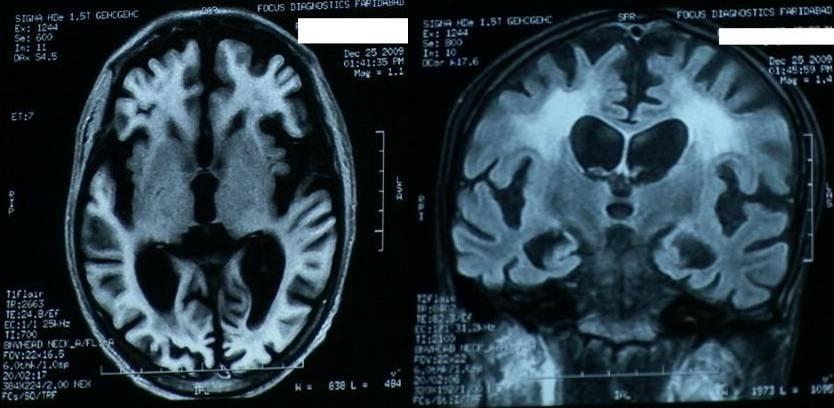
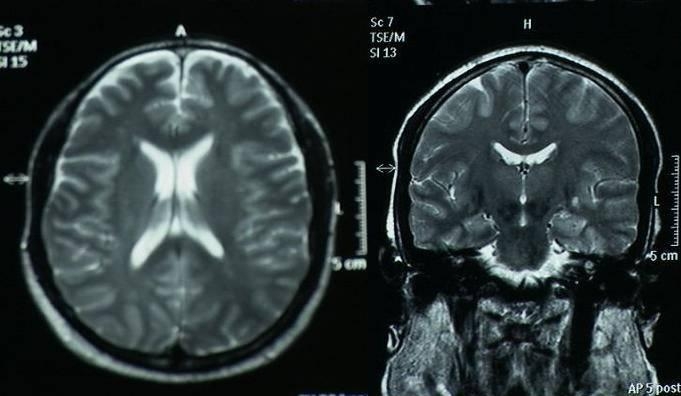
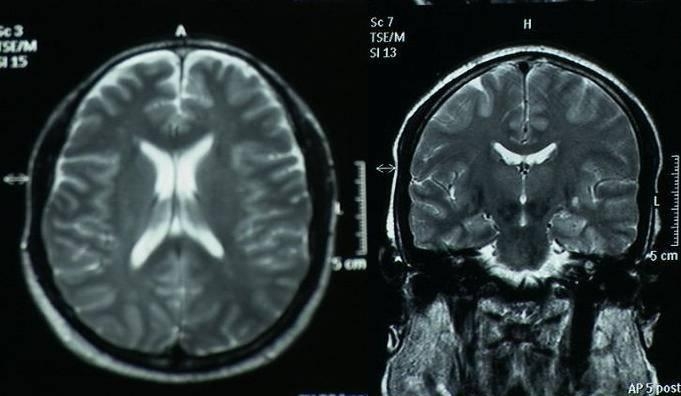
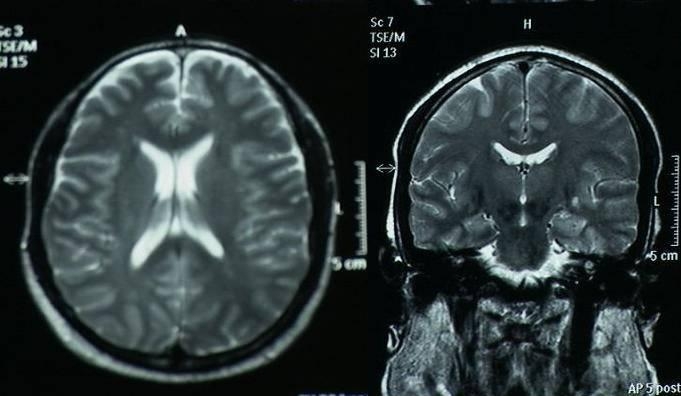
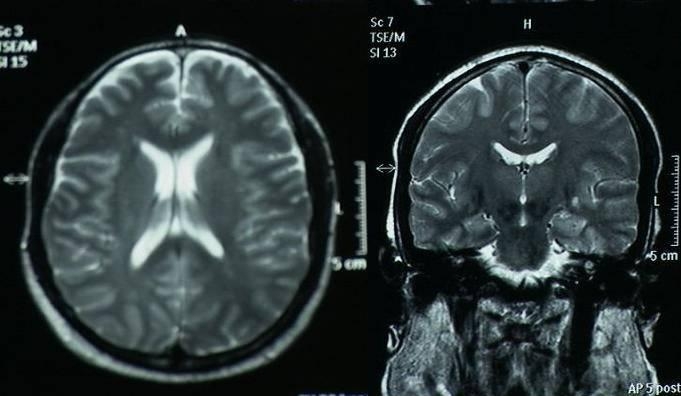
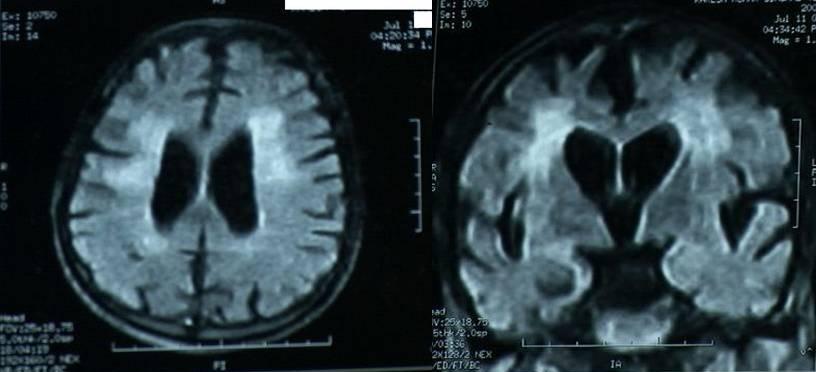
We present serial MRI studies in the case of a 45-year-old man who sustained an in hospital cardiac arrest and was successfully resuscitated after 25 minutes of cardiopulmonary resuscitation. Five years after the cardiac arrest he remains in a persistent vegetative state. Serial MRI studies (Fig 1 immediately and Fig 2 after 3 years and Fig 3 after 5 years of cardiac arrest) indicate ongoing cerebral atrophy and highlight the delayed effects of an initial anoxic injury.

References

1. Cho HJ, Kim HY, So Y. Delayed postanoxic encephalopathy with serial MRI and PET studies. Eur Neurol. 2009; 61(5):315-6.

Legends

Serial MRI axial and coronal sections studies (Fig 1 immediately and Fig 2 after 3 years and Fig 3 after 5 years of cardiac arrest) indicate ongoing cerebral atrophy and highlight the delayed effects of an initial anoxic injury.